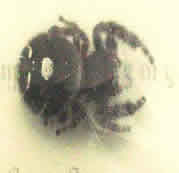
Phidippus audax, is one of the most common and conspicuous of the jumping spiders often called Orchard spiders. It is black with a distinct irregular orange to white spot on the back of the abdomen. It can be found in gardens and around homes. Photo 2 is a life jpg from a rolled up newspaper – the spider jumped out with pedapalps raised in the typical defense posture.
Jumping spiders are in the family Salticidae. Salticid spiders come in many sizes and color patterns. Hunters during the day only, they have good eyesight, relying primarily on movement to locate prey. They stalk their prey before attacking in a fast leap. Jumping spiders put out a line of webbing when they jump and can sometimes be seen dangling from this silken dragline after a leap that fails.
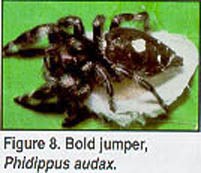
They often have conspicuous bands of black and white on their bodies or legs for background matching on trees etc. Others have velvety red abdomens and some even have metallic colors on the chelicerae. Jumping spiders have eight eyes, with one large pair in the front. Like most spiders, jumping spiders are not considered harmful to humans and are unlikely to bite unless cornered or handled. But the bite is painful and can penetrate tough human skin.